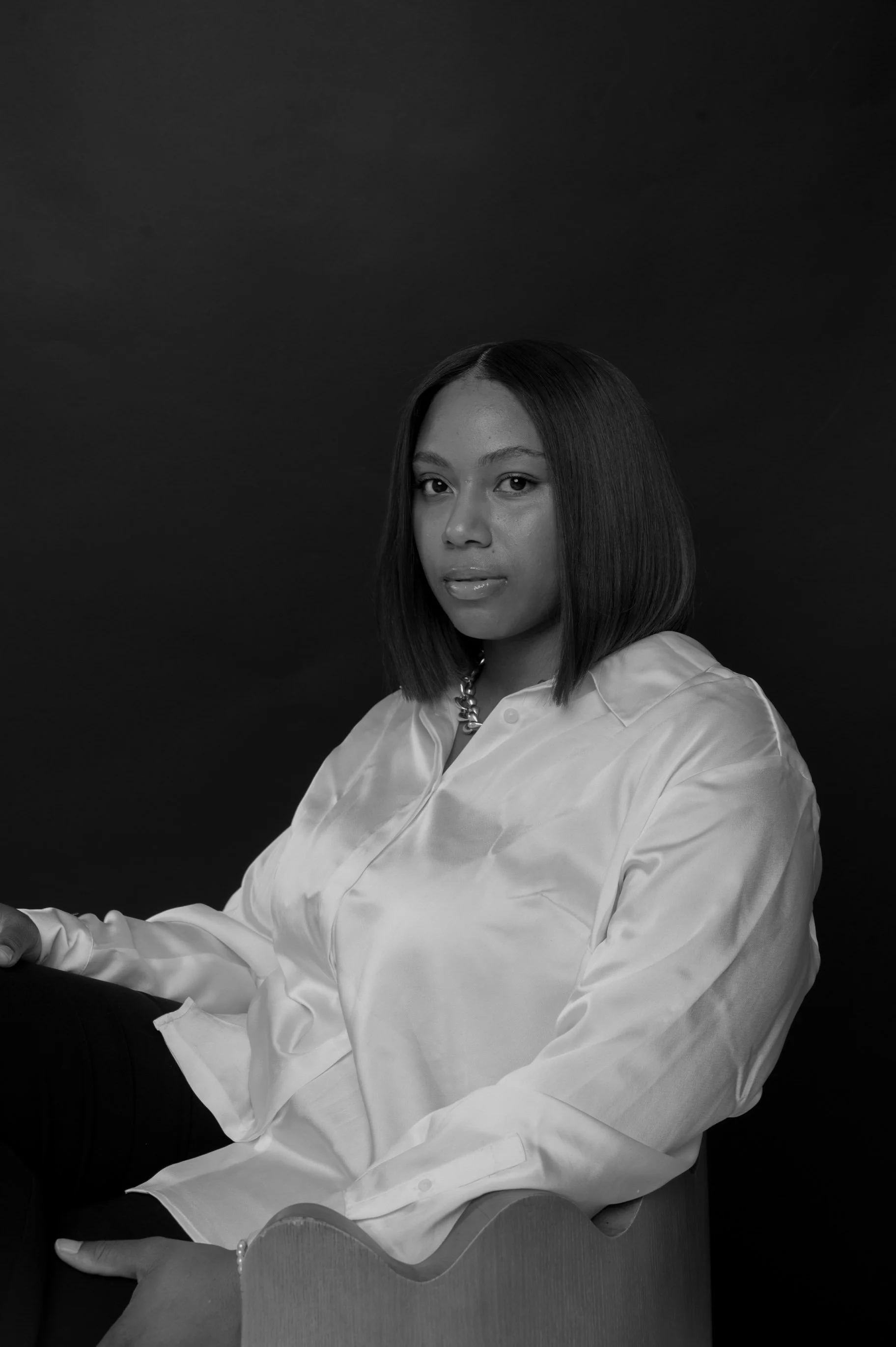
From inside the room. On the record. In plain English.
Dear Glory with Moriah Alise is a media company built on that investigation. Long-form conversations on camera. Field reports from the floors of fairs and auctions. An editorial archive. An annual gathering in Houston each October.
Moriah · Houston · 2026
Art-world strategist · Founder & Host · Houston, TX
I started Dear Glory in 2020 because the art world I was working in didn't have anyone naming it plainly. How careers actually get built. How rooms actually open. What success at the top of the market really looks like up close. I wanted those conversations on a record, in front of a camera, with the people who were actually living them.
Five years and 200+ conversations later, Dear Glory is a working platform: a YouTube channel, an editorial archive, a community of artists I'm in regular conversation with, a media partner to brands and institutions doing real work in the field, and a three-day summit in Houston every October.
My day job, before and alongside all of this, is being an art-world strategist. I work with artists, galleries, and institutions across the country on the slow, durable work of building careers. The platform is the part of that work the public can see. Most of the strategy work is private, and that's how it should be.
What I will tell you, publicly, is what I think the field is doing and where I think it's going. That's Dear Glory. It's an extension of how I already spend my hours. From inside the room.
Dear Glory didn’t arrive fully formed. It got built one Tuesday at a time — from one camera in Houston to an editorial archive, a member room, and an annual summit. Here’s the working version of the timeline. Some entries are placeholders for the team to confirm.
Moriah starts publishing long-form conversations on YouTube from Houston. No studio, no team — one camera, one microphone, one premise: the art world, on the record.
Artists, curators, and gallerists sit for conversations that the rest of the field is still circulating privately. The show finds its voice: direct, editorial, on-the-record.
The channel crosses 100 published conversations. Members of the field start citing Dear Glory in their own work. The thesis videos start landing wider than the interviews.
The editorial archive launches as a written counterpart to the channel — profiles, criticism, market analysis. The format that lets the work stand outside the YouTube feed.
UOVO, Black Art In America, and a small handful of institutional partners come on as the first sponsors. Branded reels and field reports begin running — with editorial control kept in-house.
The annual Houston summit GloryLand launches alongside Untitled Art Houston each October. The Glory Collective opens as the member hub on Patreon — GloryLab strategy sessions, the deeper Glory Edit, the working PDF library.
Dear Glory is now a six-channel investigation into what it takes to build sustainable careers, collections, and ecosystems in the art world — with a working archive, an annual summit, and a member room that’s growing every month.
Working draft — some milestones approximate. Press, partners, or members with corrections — tell us and we’ll update.
Each lane serves a different audience and a different question. The work stays connected across them.
The YouTube channel. Tuesday Live, breaking news when it warrants, and episodes and thesis videos on Thursdays — including how-tos for artists building careers and collectors building collections.
Watch the Stream 02Essays, interviews, criticism, market analysis, field notes, and the Houston files — the editorial archive of everything I'm thinking about the contemporary art world.
Open the Edit 03Short-form video from the rooms where it happens. Fairs, auctions, studios, partnerships. Mostly on Instagram, surfaced on the homepage.
See the reports 04The annual summit. Three days each October in Houston, co-programmed with Untitled Art Houston. The artists, collectors, and curators moving the contemporary art world — in the same room.
Visit GloryLand 05A working membership for artists serious about building a career. Weekly office hours, quarterly workshops, direct access to a working art-world strategist. Patreon-powered, from $3 a month.
Join the CollectiveA working list. Names, in alphabetical order, of the people who have come on Dear Glory.
Click any name to read who they are and what we talked about.
Mentions, features, and interviews where Dear Glory’s investigations of the contemporary art world have shown up in someone else’s pages. The list is short and intentional — we will add to it as it grows.
Reach out about partnerships, programming, press, the summit, or just to be on the record. I read every email myself.
hello@ for readers, members, press, corrections, and anything personal.
partner@ for brands, foundations, institutions, and sponsorship inquiries.
Derrick Adams is a New York-based interdisciplinary artist whose work centers Black leisure, Black domestic life, and the texture of joy as a political position. He's known for the Floaters series, his collaborations with major museums, and a sustained practice that has been moving the conversation about representation forward for over a decade.
He sat with Moriah for one of the conversations Dear Glory has been most proud to put on the record, alongside Dexter Wimberly. They talked about the art world, Black joy, and building on your own terms, a conversation about what it means to keep your practice yours when everyone else wants a piece of it.
Watch the full conversation in Stream.
Lex Marie is a DC-based painter whose work draws on Black childhood, memory, and the everyday objects that carry weight across generations. Howard MFA, exhibitions across the country, a body of work that lands quietly and stays with you.
On Dear Glory, the conversation was about the work that doesn't ask for permission, what it means to make paintings about your own people, on your own terms, for as long as it takes for the audience to catch up.
Ayesha Selden is a writer, real-estate investor, and one of the most direct voices in the Black wealth-building conversation. Her book and her ongoing public work focus on how ordinary income becomes durable wealth, not the influencer version of that question but the spreadsheets-and-discipline version.
On Dear Glory, the conversation extended that frame to art as part of a serious portfolio: when collecting belongs in the wealth plan, when it doesn't, and how to think about it honestly.
Dexter Wimberly is one of the most prolific independent curators working today. Over 50 exhibitions across the US and abroad, a long-running practice of championing artists at exactly the moment their careers need a curator who actually shows up, and an educational platform that's taught thousands of artists how the field actually works.
His Dear Glory conversation, in conversation with Derrick Adams, walked through what curators actually do, what they can move that gallerists can't, and the long-game patience it takes to build a career inside the institutional system. It's one of the most-watched episodes on the channel.
Watch it in Stream.
Larry Ossei-Mensah is the curator behind some of the most pointed institutional shows of the last decade. Co-founder of ARTNOIR, a global community of color in the arts, he operates at the intersection of curating, advocacy, and the unglamorous infrastructure work that makes careers move.
His Dear Glory conversation became the basis for one of our most-shared Glory Edit articles, Larry Ossei-Mensah and the curator's quiet leverage, a piece about what it means to move careers without ever signing the check.
Tanya Weddemire runs one of the working Brooklyn galleries that has been quietly building a roster of Black contemporary artists at the exact career stage where their next opportunity matters most. Her program is precise. Her artists move.
She came back to Dear Glory with specifics about what sold at her booth at EXPO Chicago 2026, on the record, when most galleries declined to share. That openness was the seed of a larger Dear Glory conversation about fair transparency, and why making sales public actually builds the market instead of cooling it.
Read the field report: 36 hours at EXPO Chicago 2026 →
Richard Beavers has been running his Brooklyn gallery for the better part of two decades, with a focus on Black contemporary artists and a program that has consistently championed working painters whose careers benefit from the long view a real gallerist provides.
His Dear Glory conversation was about the gallery business beyond the headlines, what it actually takes to operate a working program over years, how relationships with collectors compound, and where the next generation of artist representation needs to go.
Dr. Joy Simmons is one of the most respected collectors of Black contemporary art in the country. Her LA-based collection has been quietly shaping where Black painters land institutionally for decades. She is the kind of collector whose acquisition list other collectors watch, whose loans museums request, and whose long view on the field is treated as something to listen to.
On Dear Glory, the conversation was about what a serious collection actually looks like up close: how it gets built, what discipline it requires, and the difference between collecting as wealth and collecting as life.
Lester Marks has been collecting contemporary art in Houston for over three decades. His collection, and the discipline behind it, is part of why Houston now reads as a serious art city to the rest of the country. He has been buying work, lending to institutions, and sustaining artist careers since before the city's name was in the press releases.
On Dear Glory, the conversation walked through the long game: a working theory of how a city becomes an art capital, and the unglamorous, consistent, decade-over-decade work it takes to make that happen.